
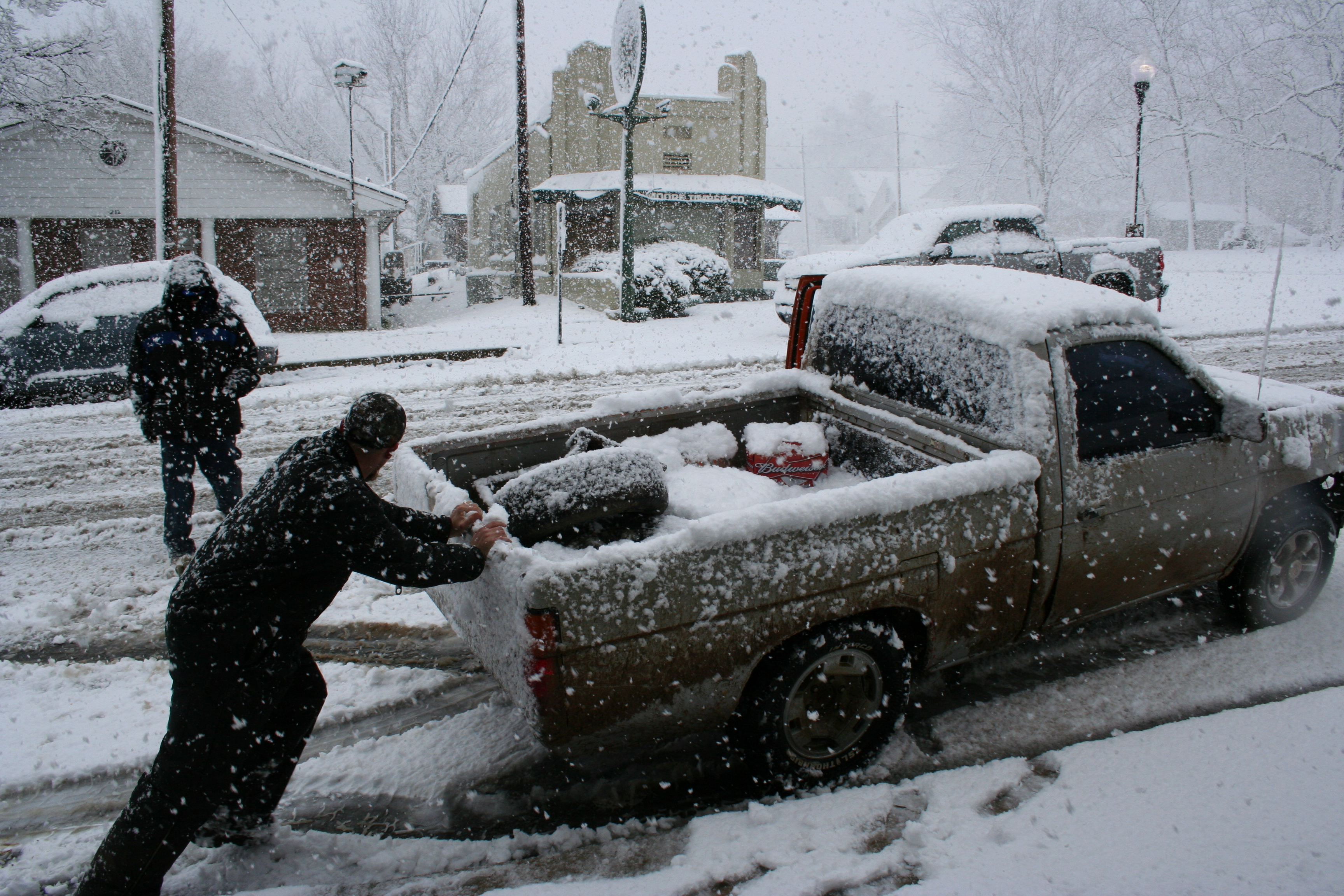
FREE RANGE CONVERSATION ON WINTER STORMS - In this Herald file photo from March 7, 2008, this scene of people trying to push a vehicle off the curbside was common sight in downtown Rison when a late season snow storm caught residents off guard. Meteorologists are predicting the first winter storm of 2025 for Cleveland County to begin this Thursday. Predicted snowfall totals were ranging to as much as 8 inches. The Free Range Conversations podcast discusses this surprise snow from 2008 and other winter storms during this week's episode.
RISON - As meteorologists are predicting anywhere from 6 to 10 inches of snow or wintry mix for Cleveland County at the end of this week, taking precautions in advance will help you be prepared for the winter storm.
The Arkansas Department of Transportation began treating local highways on Tuesday.
Current forecasts show snowfall beginning Thursday afternoon continuing through Friday evening.
During a special episode of the Free Range Conversations podcast, hosts Britt Talent, Roy Phillips and Douglas Boultinghouse discuss weather preparedness tips from the National Weather Service.
The hosts also recall past winter storms dating back to 1979 and the historic ice storms of 2000. The episode is streaming now on Apple Podcasts, Spotify and at clevelandcountyherald. com According to the National Weather Service, there are multiple ways to take precautions for your home and workplace.
Your primary concerns at home or work during a winter storm are loss of heat, power and telephone service and a shortage of supplies if storm conditions continue for more than a day. In either place, you should have available:
- Flashlight and extra batteries.
- Battery-powered NOAA Weather Radio and portable radio to receive emergency information.
- Extra food and water such as dried fruit, nuts, granola bars and other food requiring no cooking or refrigeration.
- Extra prescription medicine.
- Baby items such as diapers and formula.
- First-aid supplies. Heating fuel: refuel before you are empty; fuel carriers may not reach you for days after a winter storm.
- Emergency heat source: fireplace, wood stove or space heater properly ventilated to prevent a fire.
- Fire extinguisher, smoke alarm; test smoke alarms monthly to ensure they work properly.
- Extra pet food and warm shelter for pets.
- Review generator safety: Never run a generator in an enclosed space.
- Make sure your carbon monoxide detector is working correctly and that the outside vent is clear of leaves and debris. During or after the storm, make sure it is cleared of snow.
Though measures have been taken to prepare roads for the winter weather, the National Weather Service reports that each year, on average, more than 5,000 people are killed and more than 418,000 are injured due to weather-related vehicle crashes. If you need to drive in snow or cold conditions, they remind you to take it slow in the snow. Black ice can be difficult to see. If the temperature is near freezing, drive like you're on ice-you may be!
Before you leave the house, especially before a longer trip in winter, make sure all fluid levels are full and ensure that the lights, heater and windshield wipers are in proper condition. Keep your gas tank near full to avoid ice in the tank and fuel lines. Avoid traveling alone. Let someone know your timetable and primary and alternate routes. Then call 511 for the latest traffic and road incidents, including construction and weather conditions and restrictions. Every state offers this Department of Transportation service. Call before you leave; it might change your plans!
Fully check and winterize your vehicle before the winter season begins. Carry a Winter Storm Survival Kit that includes the following:
- Mobile phone, charger, batteries.
- Blankets/sleeping bags. Flashlight with extra batteries.
- First-aid kit. Knife. High-calorie, non-perish able food.
- Extra clothing to keep dry. Large empty can to use as emergency toilet, tissues, toilet paper and paper towels.
- Small can and waterproof matches to melt snow for drinking water.
- Sack of sand or cat litter for traction.
- Shovel. Windshield scraper and brush.
- Tool kit. Tow rope. Battery booster cables. Water container. Candle and matches to pro vide light and in an emergency, lifesaving heat.
- Compass and road maps, don't depend on mobile de vices with limited battery life.
Pets also need special attention during winter storms:
- Move animals to sheltered areas or bring pets inside. Shelter belts, properly laid out and oriented, are better protection for cattle than confining shelters, such as sheds.
- Haul extra feed to nearby feeding areas.
- Have water available. Most animals die from dehydration in winter storms.
- Make sure pets have plenty of food and water and a warm shelter.