
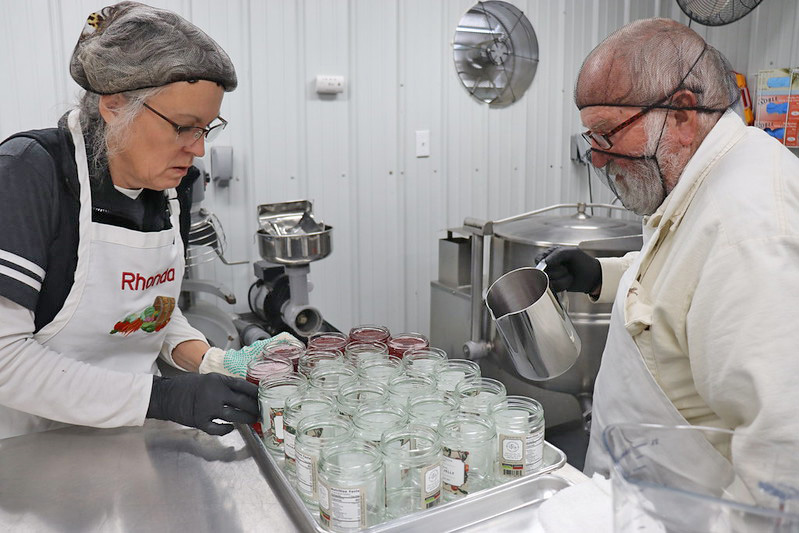
EL DORADO, Ark. - A robust sweetness, quickly followed by a sharp, tart pucker: this is the taste of Mayhaw jelly, made from a small, apple-like fruit grown in wetlands in the southern United States. Rhonda and Ken Rudder, owners of Richland Creek Farm & Market in El Dorado, hope to share their artisan Mayhaw jelly with more Arkansans through the Cooperative Extension Service's Share Grounds program based at the Cleveland County Fairgrounds in Rison.
"Mayhaws were traditionally gathered by folks who lived in our part of the world going into the swamps in May, when the water levels were high, and they would take a dip net and skim the fruit off the top of the water," said Rhonda Rudder. "They'd carry it home, wash it and prepare this jelly." Mayhaw trees are part of the rose family, and the fruit usually ripens in early summer. Garry McDonald, associate professor of horticulture for the University of Arkansas System Division of Agriculture, said Mayhaws are native to Alabama, Mississippi, Louisiana, Texas and parts of southern Arkansas.
"They're rather limited in distribution because they grow in more or less swamps or hardwood bottomlands," McDonald said. "The main reason they're not very well known is because of this limited area, and because a lot of their preferred habitat has actually been lost." McDonald said Mayhaw trees require a lot of moisture but can be successfully cultivated outside of wetlands.
"They are adaptable to more open conditions, so they don't have to grow in boggy, wet soil," he said. "You can cultivate them, but they may not thrive under drought conditions. You're going to have to irrigate them for successful fruit production if you're growing them outside of their native habitats." Rudder said a local friend, Paul McLaughlin, taught her about grafting Mayhaw trees and how to raise them. Grafting is the act of joining two plants together, so they grow as one.
"With these heritage recipes (continued from page 1) that get passed down, there's s…