
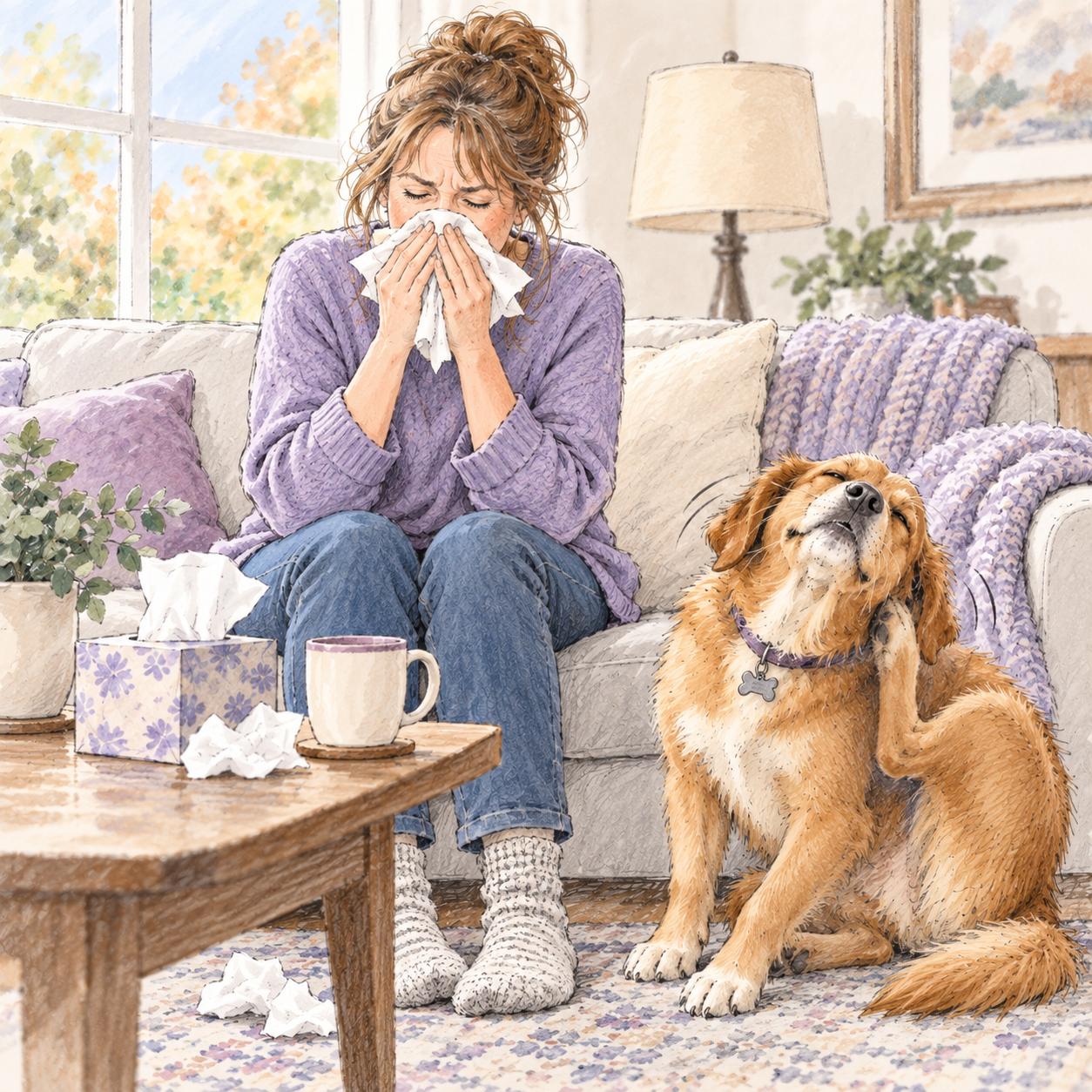
Fall is coming. The mornings are getting cooler, leaves will soon begin to change, and for many of us another familiar visitor is already making itself known, seasonal allergies. But while you're reaching for a tissue, take a look at the dog scratching beside you.
You may not be the only one in the house dealing with allergies. Dogs and cats can develop allergies to things in their environment, including pollen from trees, grass, and weeds as well as molds, mildew, and dust mites. Some environmental allergies cause problems only during certain seasons, while others can bother a pet throughout the year.
One reason pet allergies can be easy to overlook is that they don't always appear like ours. When we think of seasonal allergies, we tend to think of sneezing, watery eyes, and a runny nose. Although those symptoms can occur in pets, allergies in both dogs and cats tend to show themselves through the skin.
Watch for a pet that suddenly seems unusually itchy. You may notice repeated scratching, licking, or chewing at the paws, rubbing the face against furniture or carpet, irritated or reddened skin, or hair loss from repeated licking and scratching. The feet, face, ears, and belly are commonly affected areas in dogs with environmental allergies. And don't forget the ears. One of my pugs suffers from this yearly. Recurring redness, head shaking, ear scratching or repeated ear infections can sometimes have an underlying allergic component. Allergic inflammation can also make pets more susceptible to secondary bacterial or yeast infections. Cats can be less obvious. Excessive grooming, thinning or missing hair, small scabs, and persistent scratching around the head and neck can be signs of allergic skin disease.
Your calendar can become a useful pet-safety tool. If your pet starts licking their paws every September, develops itchy ears each spring, or begins scratching whenever a particular season arrives, write it down. Take pictures of irritated areas. Note when the symptoms started and whether they improve when the season changes. That information may help your veterinarian recognize a recurring pattern. But don't assume that every itch is an allergy. Fleas, parasites, infections, food reactions, and other medical conditions can produce similar symptoms. Diagnosing environmental allergies often involves ruling out other causes first.
Completely avoiding pollen is nearly impossible for a pet who needs to go outside, but reducing what comes back inside may help. After walks or time outdoors, wiping your pet's paws and coat can remove some of the material collected outside. Regularly washing pet bedding and keeping your home environment clean may also reduce exposure to allergens such as dust and mold. Most importantly, don't allow persistent itching to continue untreated. Constant licking, chewing, and scratching can damage the skin and contribute to secondary infections.
Seasonal allergies aren't usually the type of pet problem we think of as an emergency. But pet safety isn't only about emergencies. It's also about noticing changes before a small problem becomes a bigger one. Pay attention to more than changing leaves and cooler temperatures. If your pet suddenly begins scratching, licking his paws, or shaking his head more than usual, don't simply dismiss it as a new habit. Your pet may be telling you he's uncomfortable the only way he knows how.
For more information on this topic visit the Pet Safety Learning Center at Paws4Safety.com.
(Kim Bradley is the founder of Paws 4 Safety; a pet safety education initiative focused onhelping pet owners prepare for emergencies and everyday situations involving their pets. For more information visit the Pet Safety Learning Center at Paws4Safety.com or call 877-829-1997. Because moments matter.)