

(David West is Cleveland County’s Staff Chair and Agriculture Agent with the University of Arkansas System Cooperative Extension Service. Contact David via email at dwest@uada.edu or phone at (870) 325-6321.)
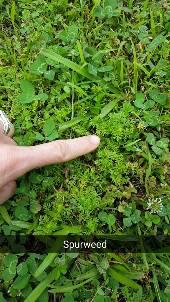
Recently, I’ve been getting the question, “What can I do about these stickers in my yard?” If you've ever walked barefoot across your lawn in the spring and suddenly felt a sharp, painful prick underfoot, chances are you've encountered spurweed, also known as stickers or burweed. It is invasive and can be painful for you and your pets. To control lawn spurweed it helps to understand its lifecycle. Spurweed is a winter annual weed.
In late winter, spurweed blooms are tiny white flowers. In the spring when temperatures begin to increase, the pollinated flowers of lawn spurweed begin to set fruit. The fruiting structures appear as small rosette buttons and develop in the leaf axils. As the fruit matures in mid to late spring, the seed in the fruiting structures develop spines, and when the fruit becomes dry, the spines become very sharp. The sticker is the seed and is left behind as these winter weeds are dying from warmer weather. Unfortunately, you can’t kill the seeds. While spurweed is fresh on your mind and stinging you or your pup’s feet it’s a good time to develop a control plan.
The best time to apply herbicides for spurweed control is in the winter months of December, January, and February. During these months, the warm season turf species are dormant and not sensitive to many herbicide applications. In most areas of Arkansas, you can also effectively control spurweed in March. The best option for homeowners to control spurweed is a post-emergence application of one of the various two and three-way mixes of 2,4-D, dicamba, and MCPP. One of the most common trade names for herbicides in this category is Trimec. The post-emergence herbicides should be applied on a sunny day when the air temperature is at least 55 degrees. Spurweed should be evaluated two to three weeks later. If the control is not acceptable, you may make additional applications. Always read the label to make sure the formulation and percentage of chemicals are appropriate for your lawn.
Also, spurweed can be prevented by maintaining a healthy turf. Healthy turf competes for water, nutrients, and space. A healthy turf can be encouraged by fertility, irrigation, and mowing height. It will act as a physical barrier, choking out many opportunistic weeds.
Next winter, monitor for the weed as it begins to grow and kill it BEFORE it blooms and sets more stickers.
If we can help with questions you may have about spurweed or other lawn issues, contact us at (870) 325-6321 Cleveland County Extension Office or dwest@uada.edu.
Pursuant to 7 CFR § 15.3, the University of Arkansas System Division of Agriculture offers all its Extension and Research programs and services (including employment) without regard to race, color, sex, national origin, religion, age, disability, marital or veteran status, genetic information, sexual preference, pregnancy or any other legally protected status, and is an equal opportunity institution.
The reference to brand names in this article is not an endorsement of these products, as the University of Arkansas System Division of Agriculture Research & Extension does not endorse specific pesticide brands.