
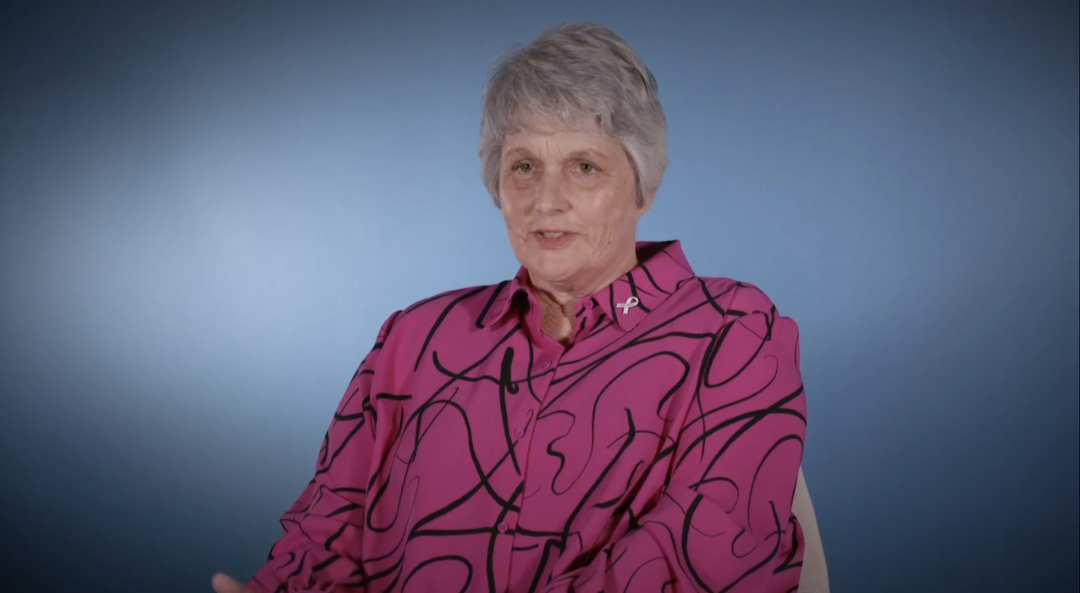
RISON - Cleveland County Cares Coordinator and cancer survivor Melinda McKnight is urging current and former smokers to get a Low-Dose CT scan (LDCT) to screen for lung cancer in this week's episode of the Free Range Conversations podcast.
The episode is now streaming on Apple Podcasts, Spotify and in its entirety on clevelandcountyherald.com under the Free Range Conversations tab.
McKnight credits the preventative screening for saving her life as she was diagnosed with lung cancer in 2023 and is now in remission.
She has since become an advocate for the LDCT, sharing her story and early detection in testimony videos for CARTI shared throughout their facilities across Arkansas, and on social media platforms.
The term low-dose refers to a lower dose of radiation used during the CT scan of the lungs.
"Just like we have screenings like mammograms, colonoscopies and others," McKnight said. "It's simply a preventive screen for lung cancer." According to McKnight, the reason they do CTs instead of xrays is because CTs pick up very minute nodules that will not show on an x-ray.
McKnight said she had her first in 2015 when she was employed by the Arkansas Department of Human Services as DHS and CARTI had a partnership that paid for the screenings for employees that met the criteria.
McKnight, a former smoker who also lost her mother to lung cancer that year, began having yearly screenings, during which one scan found a 3 mm nodule.
That nodule remained the same size for several years, according to McKnight, until 2023 when it started growing.
"They had me come back in three months and it had doubled in size," she said, noting the cancerous nodule had grown to 1.6 cm.
Comparing this to her mother's diagnosis caught much later when the nodules had turned to masses at 3 and 4 cm in size and had become inoperable, McKnight considered herself lucky she caught hers in time to have it removed.
"Prior to LDCT, usually the only way cancers were caught real early was when they were checking for something else," she said.
This is why she has become such a strong advocate of the screening and tells everyone that crosses her path.
As for the scan itself, "It doesn't entail much of anything if you don't wear any metal," she shared.
Most scans are a quick and simple process of laying on a table and holding your breath twice for different portions of the test.
"That's it," she said. "It's faster than getting a coke at Mc-Donald's." According to the American Cancer Society, people who currently smoke or formerly smoked are at higher risk for lung cancer.
To qualify for a scan, which is recommended yearly, someone between the ages of 50 and 80, must meet specific criteria:
- Currently smoke or used to smoke.
- Have at least a 20 pack-year history of smoking.
The American Cancer Society defines a pack-year is equal to smoking 1 pack (or about 20 cigarettes) per day for a year. For example, a person could have a 20 pack-year history by smoking one pack a day for 20 years, or by smoking two packs a day for 10 years.
During the podcast, McKnight shares what other health scare prompted her to quit smoking years prior to the LDCT screenings, and humorous tales of trying to hide her smoking habits over the years.
"If you like to smoke, if you're addicted to cigarettes, you're not going to quit smoking until something motivates you to stop smoking," she said.
She emphasizes that she only encourages the scan itself and makes an effort not to pressure people to quit smoking. While quitting should be the goal, McKnight knows first hand how hard that is to do.
"I'm not going to sit here and say 'You really need to quit smoking," but I will say 'You need to have low-dose CTs," she said.
"You don't have to quit smoking, but get checked," she urges.
McKnight will return as a guest on Free Range Conversations later this fall to discuss Cleveland County Cares, a nonprofit organization she started with the Pioneer Village that provides assistance to families with needy children.
The organization is especially active during the holiday season to help provide Christmas gifts and food to children.