

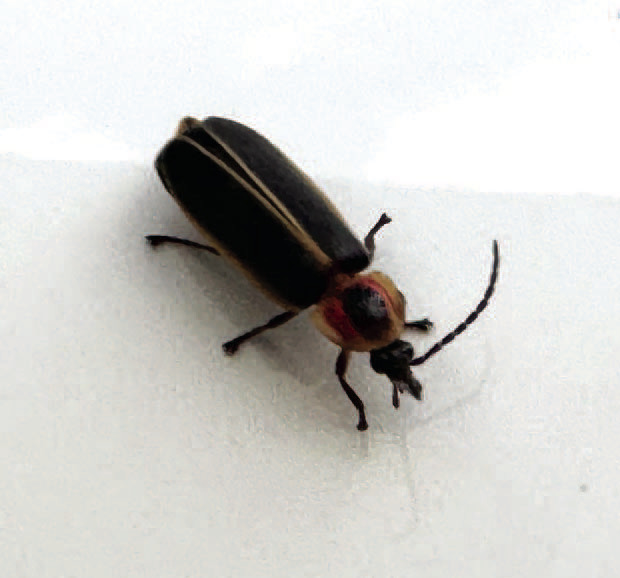
LITTLE ROCK - A little chemistry, a little coding and a whole lot of mating are just part of the story behind summer's tiny fireworks show: the lightning bug.
"Fireflies have adapted the ability to glow and flash light patterns from their abdomens primarily for one reason, to communicate with other fireflies," said Austin Jones, entomology extension instructor for the University of Arkansas System Division of Agriculture and the Dale Bumpers College of Agricultural, Food and Life Science.
"The vast majority of this communication is in order to find a date," Jones said. "Different species use different patterns to discern who is who, and males and females often flash different patterns."
Too much light
Fireflies thrive in areas where there is damp or boggy soils, tall grasses and forbs, tree canopy cover and leaf litter. When those are eliminated, so are firefly friendly environments.
"One form of pollution impacts fireflies more than most arthropods - light," Jones said. "Since these animals have adapted to communicate with light, artificial lights can effectively drown out the communication efforts of fireflies and disrupt mating, or meals for the femme fatales." Males do most of the communicating, and Jones said it is probably "because the flashes can also attract would be predators, and bottom line, males are just more expendable than females are."
In Their Language
Lightning bug signals can vary from species to species or location to location, differentiated by color, length of flash, brightness, frequency and grouping of flashes or the shape the light makes as the insect flashes and flies. For example, Photinus pyralis males fly upwards while making a sustained flash, resulting in a J shape, according to the National Park Service.
"Bioluminescence is the light produced by living things via chemical reactions," Jones said. "Many marine organisms are bioluminescent and fireflies are the most common example of terrestrial organisms that can bioluminesce." The …