
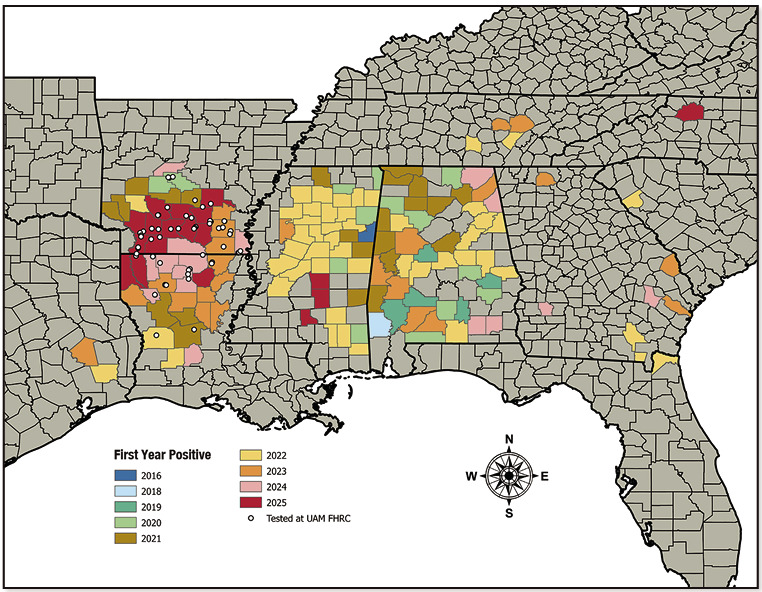
MONTICELLO, Ark. - Forest health experts from the University of Arkansas at Monticello have identified brown spot needle blight on loblolly pine in 11 additional counties in Arkansas this year, including Cleveland County, bringing the total number of confirmed counties in the state to 25.
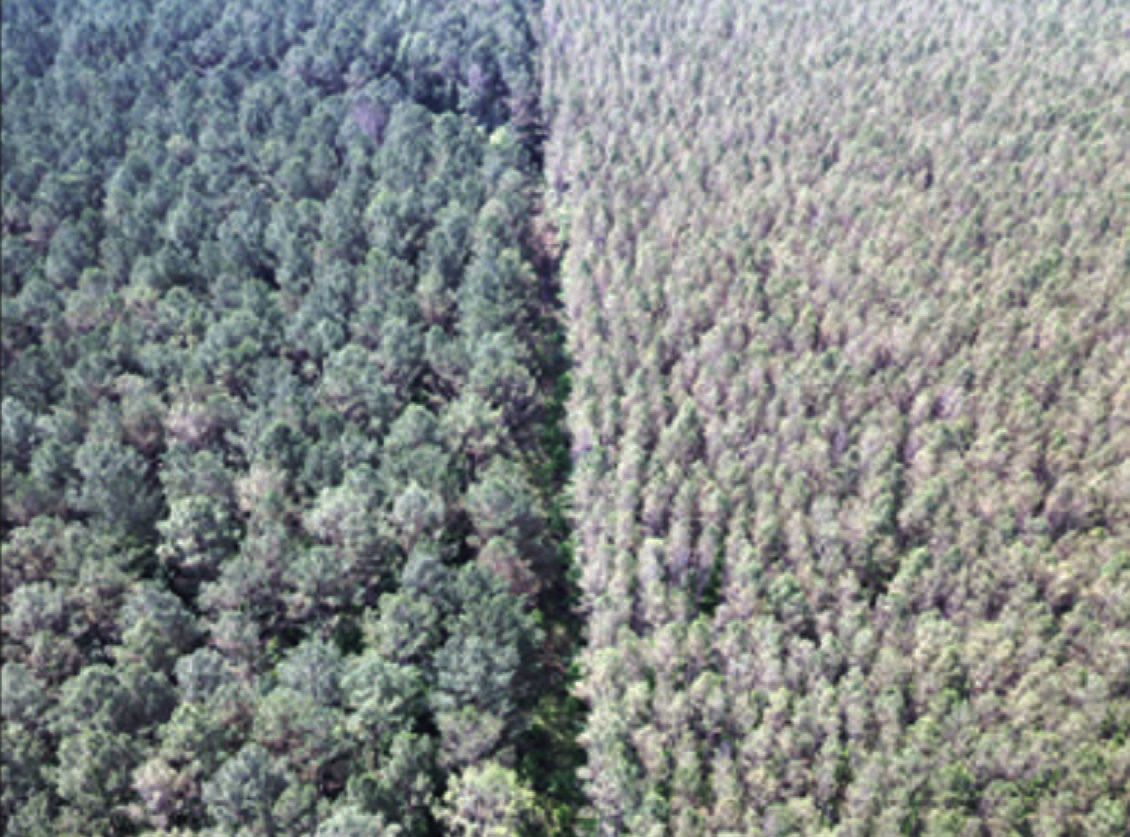
Brown spot needle blight is a fungal disease that infects pine needles, leading to premature needle loss, stunted growth and long-term stress that increases a tree's vulnerability to other pests and pathogens. While it has historically been associated with longleaf pine, Pinus palustris, in the grass stage, over the past several years it has mainly affected loblolly pine, Pinus taeda, of all ages and size classes.
"The infection is characterized by needles forming brown spots with a yellow halo, crown discoloration, and progressive needle damage and loss that can, after multiple years can lead to tree death, but this is a slow process," said Laura Sims, director of the Arkansas Forest Health Research Center and associate professor of Forest Health at UAM. "Still, the disease is very concerning because it is now widespread across the loblolly pine producing area." Temperature, humidity and rainfall patterns have a large in-fluence on the pathogen's growth, spread and infection process. Most of the infections occur during the rainy season, particularly from late spring through early summer.
Doubling Down
"Fall spore production has been observed at some sites in (continued from page 1) southeast Arkansas and southcentral Louisiana, Mississippi and Alabama, extending the dispersal period to twice a year in some locations, and speeding up the disease progression," said Sims.
Along with her research technicians and forestry student workers, Sims has been monitoring and identifying outbreaks of brown spot needle blight across the Southern region with a focus on Arkansas.
Brown spot needle blight was first confirmed in Arkansas in 2020, with detections in Garland and Saline counties. The d…