
As cat lovers, we pride ourselves on knowing our feline companions inside and out. We know their favorite sunspots, the exact pitch of their dinner meow, and precisely how they handle their favorite toys. We watch them sprint across the room and assume that outward vitality reflects inward perfection. But as a pet columnist and a devoted pet parent myself, I recently had a sobering reminder that what we see on the outside doesn't always tell the whole story.
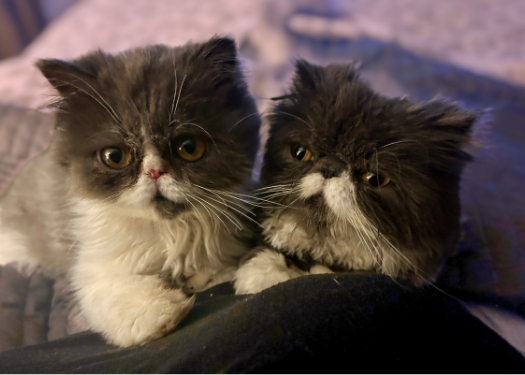
While my own cat, Merlin, is thriving, my daughter’s bonded pair of Persian siblings, George and Gretchen, have their own distinct journeys. Gretchen’s respiratory hurdles are obvious due to her uniquely tiny nasal cavity; you can hear her struggles. George, on the other hand, seemed “okay.” He had no cough, no outward signs of illness. This brings us to a critical, under-discussed topic every cat owner must understand: the "silent" nature of feline heart disease. Unlike dogs, who often broadcast heart issues by developing a persistent cough or slowing down noticeably on walks, cats are masters of disguise. In the wild, showing weakness makes you prey, so cats evolved to mask illness until it reaches a tipping point. The most common cardiac condition in cats, Hypertrophic Cardiomyopathy (HCM) causes the heart muscle to thicken inwardly. This change often occurs without creating the turbulent blood flow required to produce an audible heart murmur.
A cat can have advanced structural heart disease while acting completely normal, purring warmly on your lap. HCM can strike any cat, including domestic shorthairs, certain breeds carry a much higher genetic predisposition to this silent threat. Knowing your cat’s heritage is a vital piece of the puzzle. Purebred cats like Persians, Maine Coons, Ragdolls, Sphynx, and British Shorthairs are prone to inheriting HCM. For some of these breeds, specific genetic mutations have been identified, meaning they can pass the trait down through generations even if they look completely healthy. If you share your home with one of these specific breeds, screening should be a routine part of their healthcare conversation, not a reactive measure when they slow down. So, if our cats won't tell us they are sick, and standard stethoscopes can miss the clues, how can we protect them? Fortunately, there are proactive action steps we can take at home and at the clinic to catch this silent threat before it becomes an emergency.
Action Steps for Cat Owners
• Track the Resting Respiratory Rate (RRR): This is the single most powerful tool you have at home. When your cat is fast asleep or completely relaxed, count how many times their chest rises and falls in one minute. One rise and fall equals one breath. “A healthy cat at rest generally breathes fewer than 30 times per minute. If that rate consistently rises above your cat’s normal baseline, particularly above 35, contact your veterinarian. Increased breathing rate can be an early warning of a developing problem”.
• Request a Cardio pet proBNP Blood Test: During annual bloodwork, ask your vet about this specific screening tool. It measures a biomarker released into the bloodstream when feline heart tissue is stretched or under stress. A high score flags the need for deeper investigation, even if the cat seems perfectly healthy.
• Invest in an Echocardiogram: If an X-ray or a blood test hints at a problem, the absolute gold standard is a cardiac ultrasound. It allows a veterinary specialist to see inside the heart walls, assess pumping efficiency, and catch issues long before external symptoms arise.
Our cats give us unconditional love, wrapped in a stoic package. By tracking their breathing at home, and advocating for advanced screenings, especially for at-risk breeds, we can speak for them when their hearts cannot.
Kim Bradley is the founder of Paws 4 Safety; a pet safety education initiative focused on helping pet owners prepare for emergencies and everyday situations involving their pets. For more information visit the Pet Safety Learning Center at Paws4Safety.com or call 877- 829-1997. Because moments matter.