
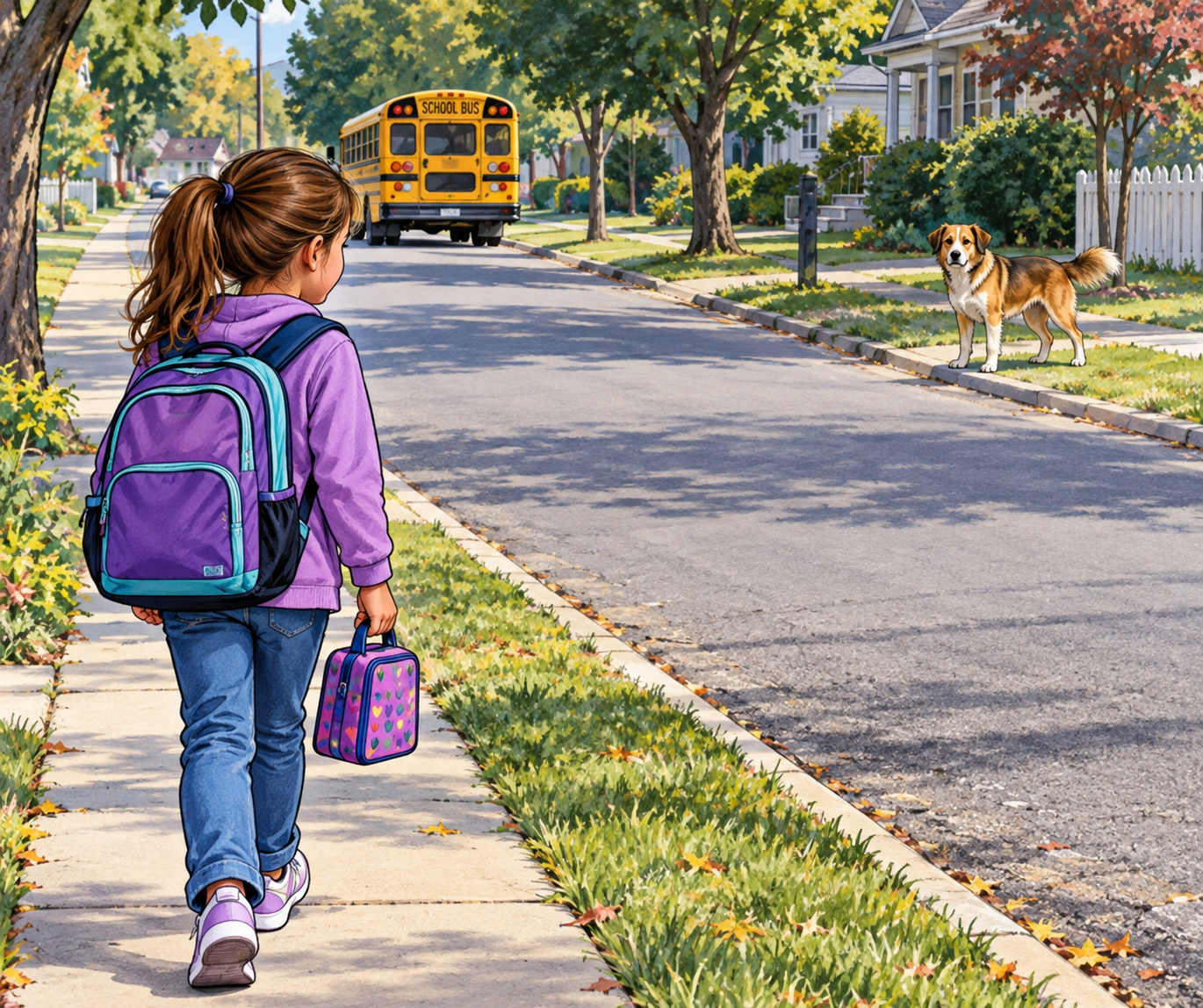
Kids are back in school, and neighborhoods are busy again. Children are walking to bus stops, riding bikes and heading home with friends. Gates get left open during rushed morning routines. Backpacks and lunch boxes may still carry the smell of food. And somewhere along the way, a child may encounter a loose dog they don't know.
Dog bites involving children tend to increase during the summer months, when children and dogs spend more time outdoors. But with summer winding down and children returning to school, this is no time to let our guard down.
We can't prevent every dog bite or attack. A child can do everything they've been taught, and a dog may still behave unpredictably. What we can do is teach children a few simple actions that may decrease their risk and help them know what to do if an encounter becomes an emergency.
Instead of giving your child a long list of rules, start with three.
1. You see a dog you don't know…Don't approach it. Don't try to pet it.
Children don't need to decide whether an unfamiliar dog looks friendly. Make the rule simple: Don't pet dogs you don't know.
2. A loose dog comes toward you…Don't run. Stay quiet. Avoid direct eye contact.
Teach your child to remain calm and still, with their body turned slightly sideways. If the dog moves away or it becomes safe to do so, slowly back away.
If riding a bicycle, don't try to outrun the dog. If it is safe to stop and dismount, the bicycle may provide a barrier between the child and dog while slowly moving away.
These aren't guarantees that a dog won't attack. They are actions intended to help decrease the risk.
3. The dog attacks or knocks you down… Cover your head and call for help.
If knocked down, curl into a ball and protect the head, ears and neck with the hands and arms. If possible, put something between yourself and the dog. A backpack, jacket or other object may provide a barrier.
Parents might also consider a child-safe emergency whistle, particularly for children who walk or bike to school or wait for a bus without an adult nearby. Teach your child that the whistle isn't intended to repel a dog; it's a way to call for help if an attack occurs. Make sure it's accessible and your child knows when to use it.
Prevention Starts with the Adults
Keeping children safer is also a community responsibility. If you own a dog, make sure it is safely contained or under your control, especially during busy before and after school hours when children may be walking or riding bikes through the neighborhood. Check gates and fences regularly, and don't assume your dog will stay in the yard simply because it usually does.
If you repeatedly see a loose dog in your neighborhood, don't wait for a child to have an encounter before reporting it. Contact your local animal control agency or appropriate local authority and let them handle the situation.
Finally, quiz your child.
You see a dog you don't know. What do you do?
A loose dog approaches you. What do you do?
The dog attacks or knocks you down. What do you do?
Better yet, practice the answers together. Children practice fire drills, so the response is familiar before an emergency happens. Dog safety deserves the same preparation.
We can't prepare our children for every situation, and we can't promise that following these steps will prevent every bite or attack. But we can give them simple actions that may decrease their risk and a plan to follow if something goes wrong. The first time your child hears “Don't run!” shouldn't be when an unfamiliar dog is running toward them.
(Kim Bradley is the founder of Paws 4 Safety; a pet safety education initiative focused onhelping pet owners prepare for emergencies and everyday situations involving their pets. For more information visit the Pet Safety Learning Center at Paws4Safety.com or call 877-829-1997. Because moments matter.)