
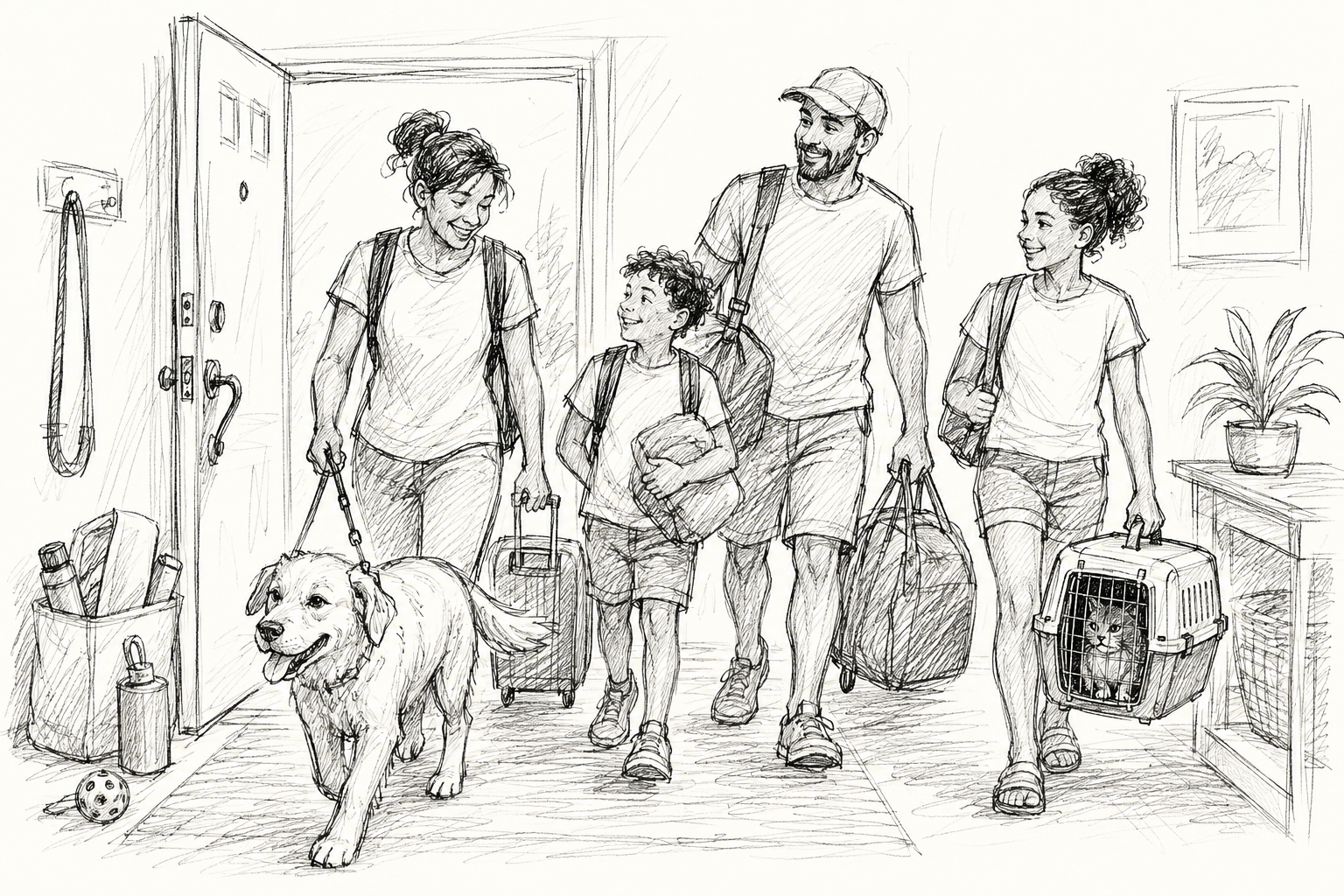
As summer winds down, many of us begin putting away the things that traveled with us during vacations, weekend getaways, and summer adventures.
We empty suitcases, wash clothing, clean coolers, and inspect things we'll use again. We check for damage, throw away what has expired and replace what needs replacing. We want our belongings clean, safe, and ready for the next trip.
But what about the things our pets traveled with?
Leashes, harnesses, carriers, bowls, blankets, toys, and travel bags went to many of the same places we did. Before putting them away until the next adventure, give your pet's gear the same end-of-season inspection you give your own.
Start with food and water supplies. Collapsible bowls can be quickly rinsed, folded while damp and tossed back into a bag. Food particles can remain in seams and corners, while moisture and saliva provide an environment where bacteria, mold and odors can develop. Thoroughly wash and completely dry bowls and food containers before storing them.
Blankets, towels, and crate pads collect fur, dirt, saliva and whatever your pet encountered on campground grass, hotel floors, or the backseat. Launder washable items and vacuum or wipe down those that can't go into the washing machine.
And don't forget the pet! A quick bath or grooming session can help uncover and remove unwanted hitchhikers that may have come home from those summer adventures.
Cleaning takes care of what came home. Inspection can help prevent what happens next.
Run your hands along leashes and harnesses. Look for fraying, weakened stitching, chewed areas or other damage. Test buckles, clips, and adjustment points. A worn leash that breaks at home is an inconvenience. One that breaks beside a busy highway or in an unfamiliar town can quickly become an emergency.
For cats, inspect carriers carefully. Check mesh, seams, fasteners, doors, and latches. That latch you've noticed getting a little loose could become a very big problem when a frightened cat pushes against it in a veterinary parking lot.
Check toys as well. Loose pieces, exposed stuffing, damaged seams, or heavily chewed areas can turn a favorite toy into a choking or ingestion hazard. Sometimes a favorite toy has simply reached retirement age.
Next, empty your pet’s travel or emergency bag. Check expiration dates and replace used, expired, or damaged first aid items.
Pay particular attention to medications. If medication spent hours in a hot vehicle or travel bag this summer, don't assume it's still safe or effective. Check its storage requirements. If it may have been exposed to temperatures outside those recommendations, ask your veterinarian or pharmacist whether it should be replaced.
Check identification tags for wear and make sure phone numbers and emergency contact information is still current and legible. If you replace a leash, harness, or carrier, fit and test the new equipment now. An emergency or the morning you're leaving on a trip isn't the time to discover that a harness doesn't fit or a new carrier is difficult to secure. This isn't just end-of-summer cleaning. It's one more part of being prepared.
A frayed leash, failing carrier latch, damaged toy or compromised medication is a minor problem when discovered safely at home. The same problem can become an unforeseen emergency when discovered hundreds of miles away.
Before putting away your pet's summer gear, remember three things: Clean it. Inspect it. Restock it. Preparedness isn't only knowing what to do when an emergency happens. Sometimes the best preparation is finding the small problem that keeps the emergency from happening in the first place.