
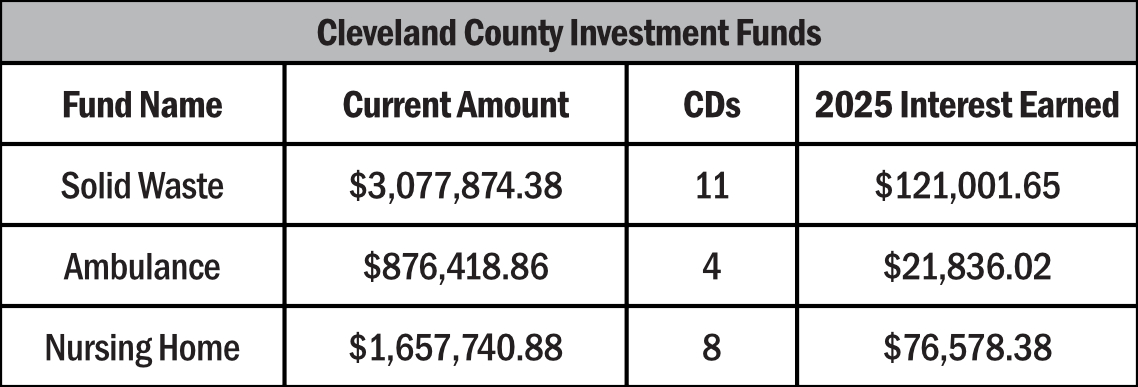
RISON - One of the questions that voters presented to the candidates during the political forums leading up to the election for Cleveland County Judge was how they would utilize the $5.6 million the county has in its so-called “investment fund.”
That fund actually consists of three separate funds: a solid waste fund, an ambulance fund and the “nursing home” fund, which was started with the money the county received for selling its nursing home license.
While that much money is enticing for a small county like Cleveland County, there are state laws that regulate how that money can be spent.
In this week’s Free Range Conversation podcast, Herald publisher Britt Talent and Douglas Boultinghouse sat down with Cleveland County Treasurer Angie Kimsey to get a true picture of how that money can and cannot be used.
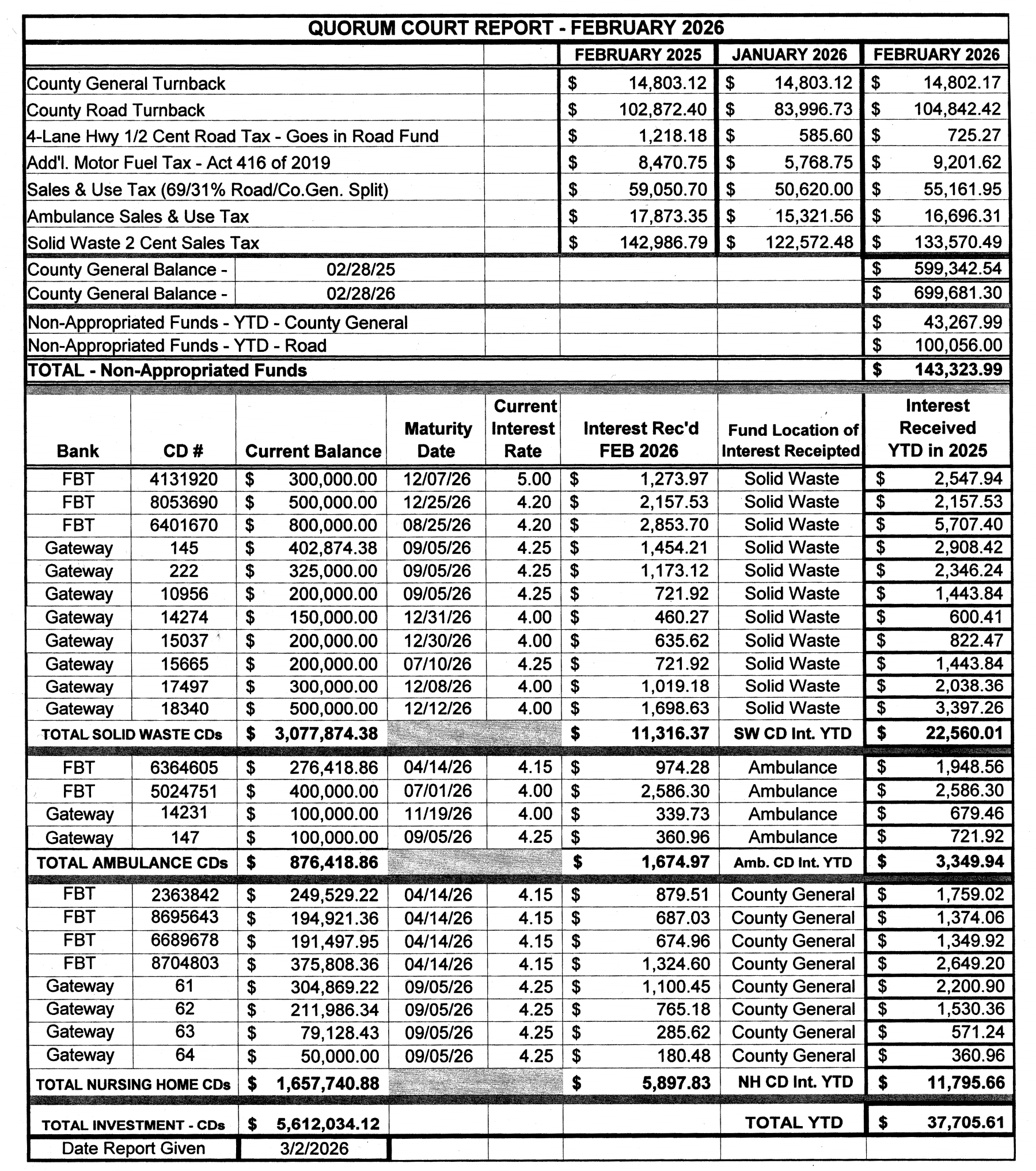
As of the last financial report that Kimsey presented to the Cleveland County Quorum Court during its March meeting, there is currently $3,077,874.38 in the solid waste fund; $876,418.86 in the ambulance fund; and $1,657,740.88 in the nursing home fund. Each fund consists of multiple certificates of deposits (CD) ranging in size from about $79,000 to $800,000. Currently, those CD’s are earning anywhere from 4 to 5 percent interest based on when they were purchased.
While the nursing home fund was started with the money the county received for its nursing home license, the solid waste and ambulance funds are funded with surplus sales tax money.
She explained that Cleveland County has three separate sales taxes: 1 percent is a general sales tax of which 69 percent goes to county roads and 31 percent to county general; a 2 percent sales tax to fund a solid waste service (approved by voters in 2014); and 0.25 percent to help subsidize an ambulance service (approved by voters in 2004).
The sales tax for both the solid waste and ambulance services have, so far, generated more revenue than is needed to pay for the services. As a result, Kimsey said both accounts can build up large balances over time, and rather than keeping that money in the checking account, it is invested instead in CDs.
As an example, Kimsey said it costs the county a little less than $70,000 per month to pay for the trash pick-up service. However, the monthly financial report shows so far this year that the county has generated $122,0572 and $133,570 per month in solid waste sales tax revenue. That equates to a surplus of more than $50,000 per month.
On top of that surplus revenue, Kimsey said the county also puts the interest earned off the CDs back into those respective accounts. Over the first two months of 2026, that equates to $22,560 for the solid waste fund and $3,349.94 for the ambulance fund.
Kimsey said people ask her why the county does not use that money to pay for other expenses, mainly roads. She explained that state law prohibits the county from spending that money on anything other than what the tax was voted in for. In other words, the solid waste money can only be used for solid waste expenses and the ambulance fund money for ambulance expenses.
The only fund where the county and quorum court does have some discrepancy is with the nursing home fund. Since the seed money to start the fund came from the sale of a county asset, there are no limitations on how it can be spent.
The $1.6 million in the fund has generated $11,795.66 in interest over the first two months of the year. She said the interest money is put into the general fund to help pay for county expenses.
While the county can use that money for how it sees fit, it has been hesitant to do so.
Talent said he could recall only one time that the county tapped in the nursing home fund, and that was to use about $20,000 to help supplement a grant that the late County Judge Gary Spears secured to build the Hall-Morgan Veterans Building.
Kimsey said the main reason for that is that the county considers the nursing home fund to be a financial safety net of sorts should the county courthouse or other building be destroyed during a natural disaster.
“We (the county) have to continue to operate (in the event of a natural disaster),” she said, noting that much of the state and federal disaster relief money comes in the from of reimbursements that county spends first.
Sales Tax Surplus
When both the ambulance and solid waste sales taxes were proposed to voters in 2004 and 2014, respectively, it was estimated that was the amount needed to fund those services based on the county sales tax collections at that time. However, both taxes have proven to generate more than is currently needed.
During the podcast, Talent speculated that the surplus tax revenue could be related to some changes in how local sales taxes are applied in Arkansas since the taxes were first approved by voters.
For instance, when voters approved the ambulance sales tax in 2004, that was four years before the state implemented a “destination” sales tax in 2008.
Under the destination tax, the sales tax rate for where an item is delivered is applied rather than the sales tax rate where it is bought. For example, Talent said if someone bought a refrigerator in Pine Bluff and had it delivered to a residence in Cleveland County, the Cleveland County sales tax rate would be applied to the refrigerator. That was one source of tax revenue that did not exist when the ambulance tax was passed.
Another change took place in 2019 when the state began to collect local sales taxes for online purchases. With such a limited retail base in Cleveland County, many residents rely on online purchases for goods, and that is new tax money that did not exist before.
Kimsey did say that if the taxes were to be reduced, it would have to be by a vote of the people. She said that idea had been discussed in the past, but would require some legal counsel to make it sure it was done properly.
At the same time, Kimsey also cautioned about reducing a tax only to see the costs eventually exceed the revenue generated by the reduced tax.