
David West is Cleveland County’s Staff Chair and Agriculture Agent with the University of Arkansas System Cooperative Extension Service. Contact David via email at dwest@uada.edu or phone at (870) 325-6321.
The wise king Solomon said, “To everything there is a season, and a time to every purpose under the heaven:” One of the things he includes after this statement is “a time to plant, and a time to pluck up that which is planted;”
Many people have already planted their cool season crops like: collards, carrots, turnips and onions. After we get a few warm sunny days and start seeing the warm season vegetable transplants at our retailers we start dreaming of fresh tomatoes and peppers from the garden. However, this does not necessarily mean it is time for planting.
For our area the average date of last spring freeze is around March 20- March 27th. Remember, this is only an average, potentially it could frost much later. Once we have reached our average last freeze date we can check the fourteen-day weather forecast and if it looks like overnight temperature lows won’t dip below forty it’s probably safe to plant.
However, another thing to consider is soil temperature. Few gardeners check the soil temperature before planting, but it is probably the most important factor affecting seed germination and plant growth. Planting too early, before allowing the soil to warm up, can lead to seed rot, delayed germination, root decay, poor growth and disease.
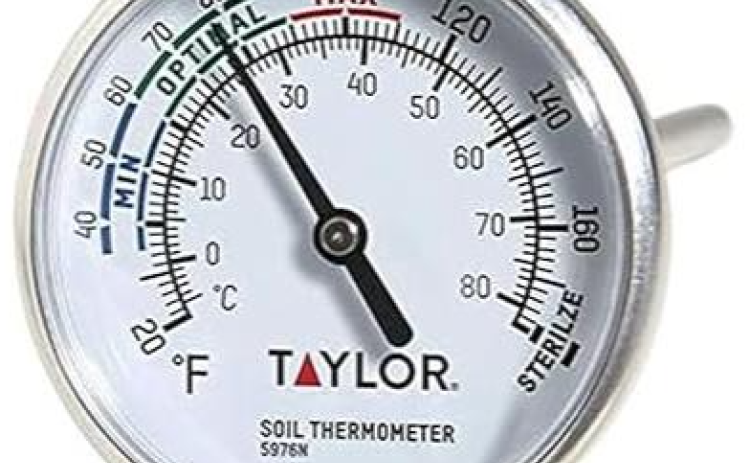
Soil thermometers are the most common tool for measuring soil temperatures. To determine the soil temperature, push the thermometer into the soil to the depth of the seed planting. For transplants it is best to push the probe to a depth of 4 inches. Warm season crops, such as beans, tomatoes, peppers, and squash can germinate at minimum soil temperatures of 55-60 F. Ideal range for plant growth and planting is 65-86 F.
Stop by the Extension office to pick up a Year Round Home Garden Planting Chart.